On Communicating and Collaborating
In my writing and research process, I took similar approaches to all my projects. To begin with, I did some research to figure out what my social issue topic would be for this semester. I started out by simply googling social issues, and there were over a million hits- way too many to choose just one. So, I decided to google ‘contemporary young adult social issues’ and it provided me with some interesting topics- such as racial inequality/ the Black Lives Matter Movement. I decided to go right to the source to see if this was an issue I would want to explore, so I went to the movement’s home page and read about their objectives and goals. I thought it would be challenging and enlightening for me (as well as my readers) so I decided this would be my topic. My other research generally went on the same way- searching online for broad topics, then narrowing it down to specifics, such as imprisonment statistics based on race, sentencing times based on race, and so on.
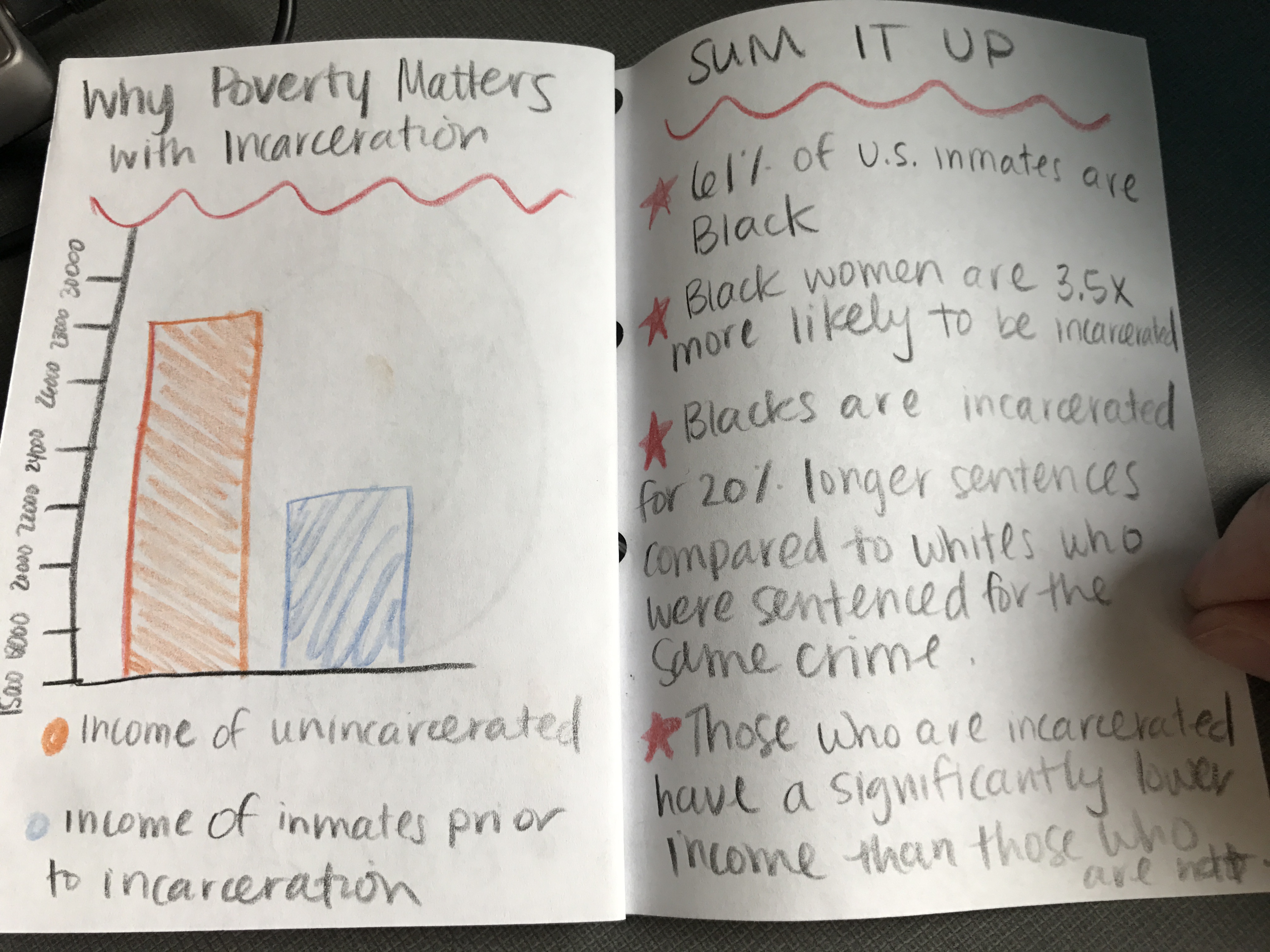
My perspective was one of the reasons I chose this topic- I am a white, middle aged male who has felt torn about whether or not I ‘support’ (or believe in?) racial inequality, especially regarding the social justice system. My beginning perspective was simply confused, and it did definitely change throughout the semester, primarily with the persuasion effect project. I created an info graphic and did research on incarceration rates and sentencing time. The Wall Street Journal published an article titled Wide Racial Disparity in Men’s Sentencing by Jo Palazzolo that said, “Prison sentences of black men were nearly 20% longer than those of white men for similar crimes in recent years.” This was inexcusable evidence of the racial inequality in our criminal justice system. This was the most influential piece of evidence I found, because it simply had no explanation other than institutional racism.
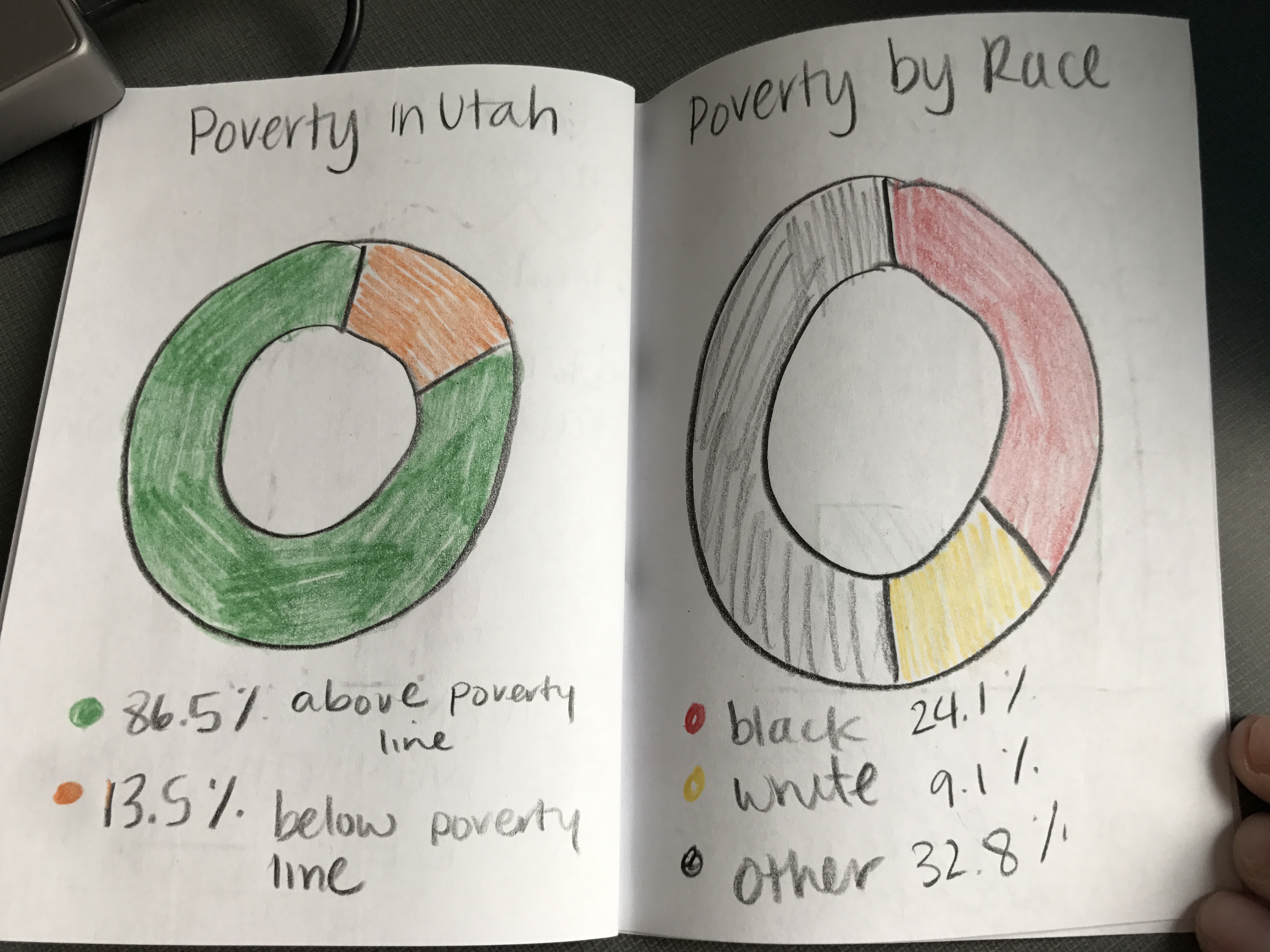
I chose to write in a variety of styles including a picture collage profile, an essay of a flash memoir, and a statistic-based info graphic. Each was a rhetorical choice based on the purpose and information I wanted my readers to interpret. The profile of Spike Lee was created in black and white (symbolic for the issue), outlining his entire lifetime from childhood, teen years, college, and adult life and his involvement and opinion on the Black Lives Matter Movement. The flash memoir essay seemed most appropriate to tell my story- just with simple words. My persuasion effect project consisted of a long info graphic with statistic-based graphs and graphics including explanations of the hard numbers and what they mean for racial inequality in the criminal justice system.
For my translation/adaptation, I ended up keeping my original profile (single page of Spike Lee’s images and headlines), but Instead of having another page listing the picture’s explanations, I chose to create a slideshow of the same images in the profile with explanations on the pictures describing their significance. I also chose to put the pictures in chronological order of Spike Lee’s life, to put a time frame on the single page above it. You may view the profile project, along with my flash memoir and persuasion info graphic here.
Our collaboration efforts to create the magazine project was highly effective. I was the writing editor, who was responsible for looking over everyone’s writing and providing feedback for the final product. Our group interacted great and we all worked and played our part to get the magazine looking and reading well. It was a good overall experience, and the final product can be viewed here.
Notebook #5, activity 2k was a really great activity where we were suppose to find maps related to our issue and post them/discuss them. This notebook helped prepare me for my persuasion effect project, where I decided to do an infographic on the Black Lives Matter Movement/ Racial inequality in the judicial and incarceration system. It gave me some insight on inequality spanning across the US and the world.
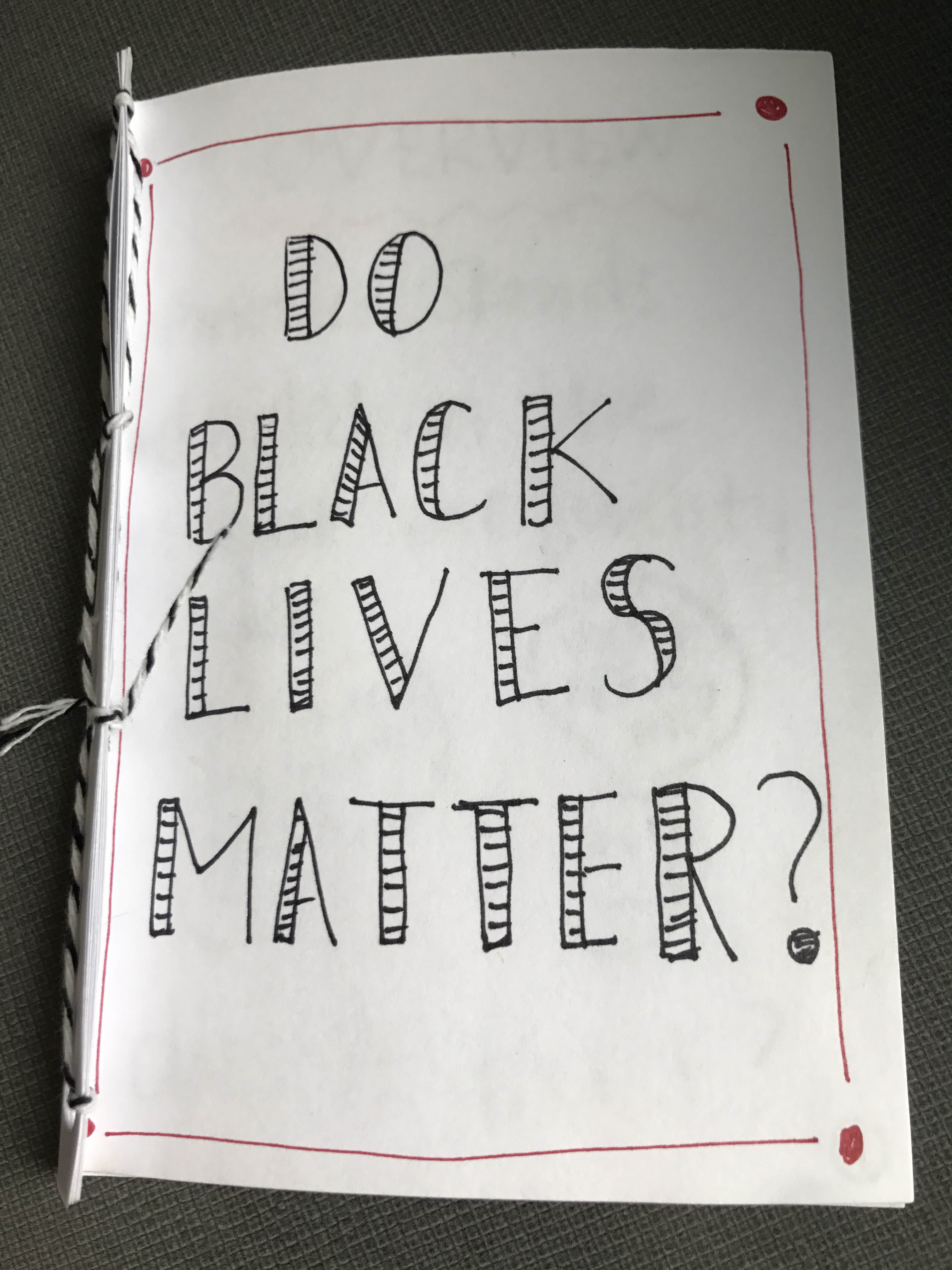
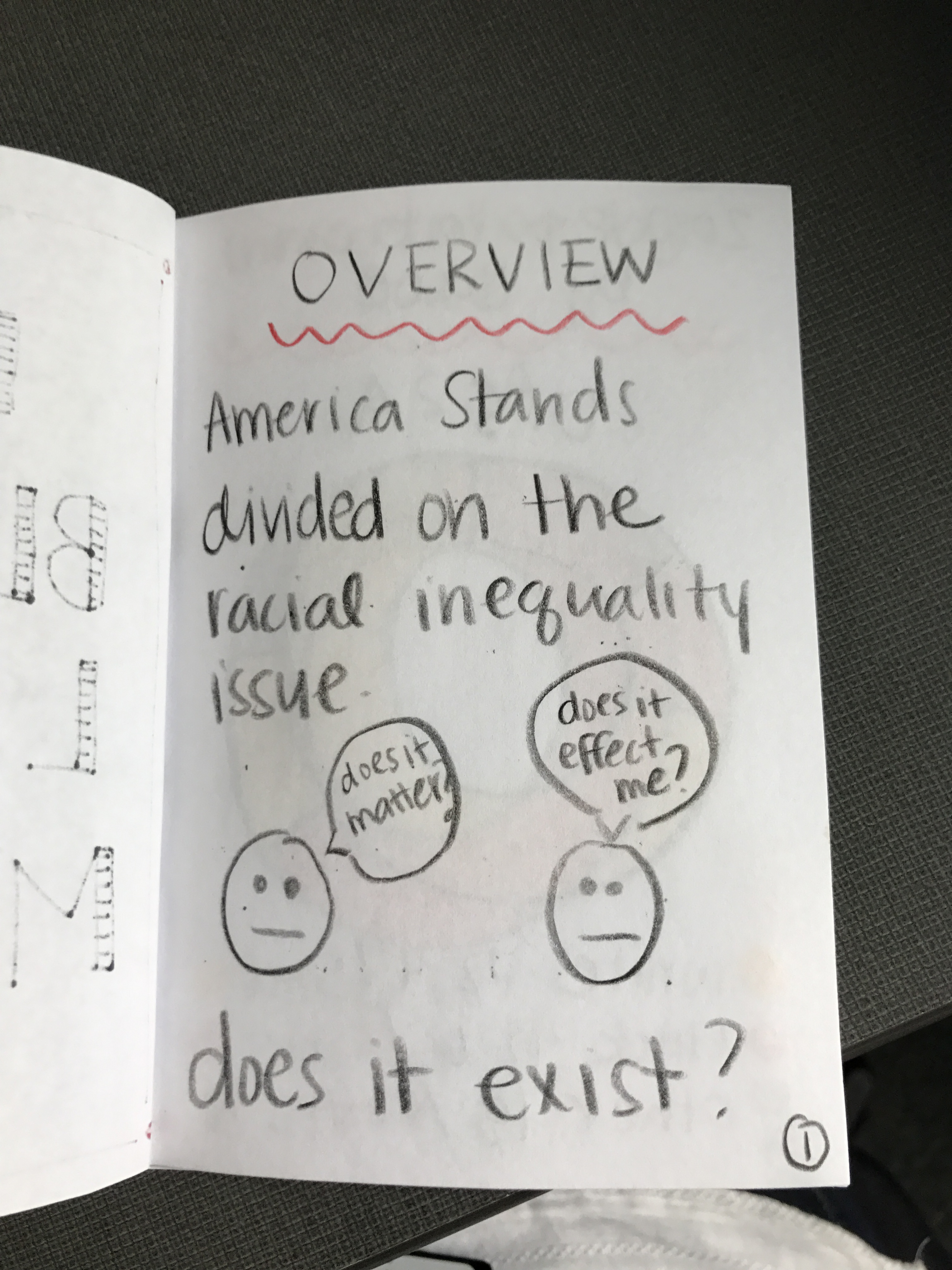
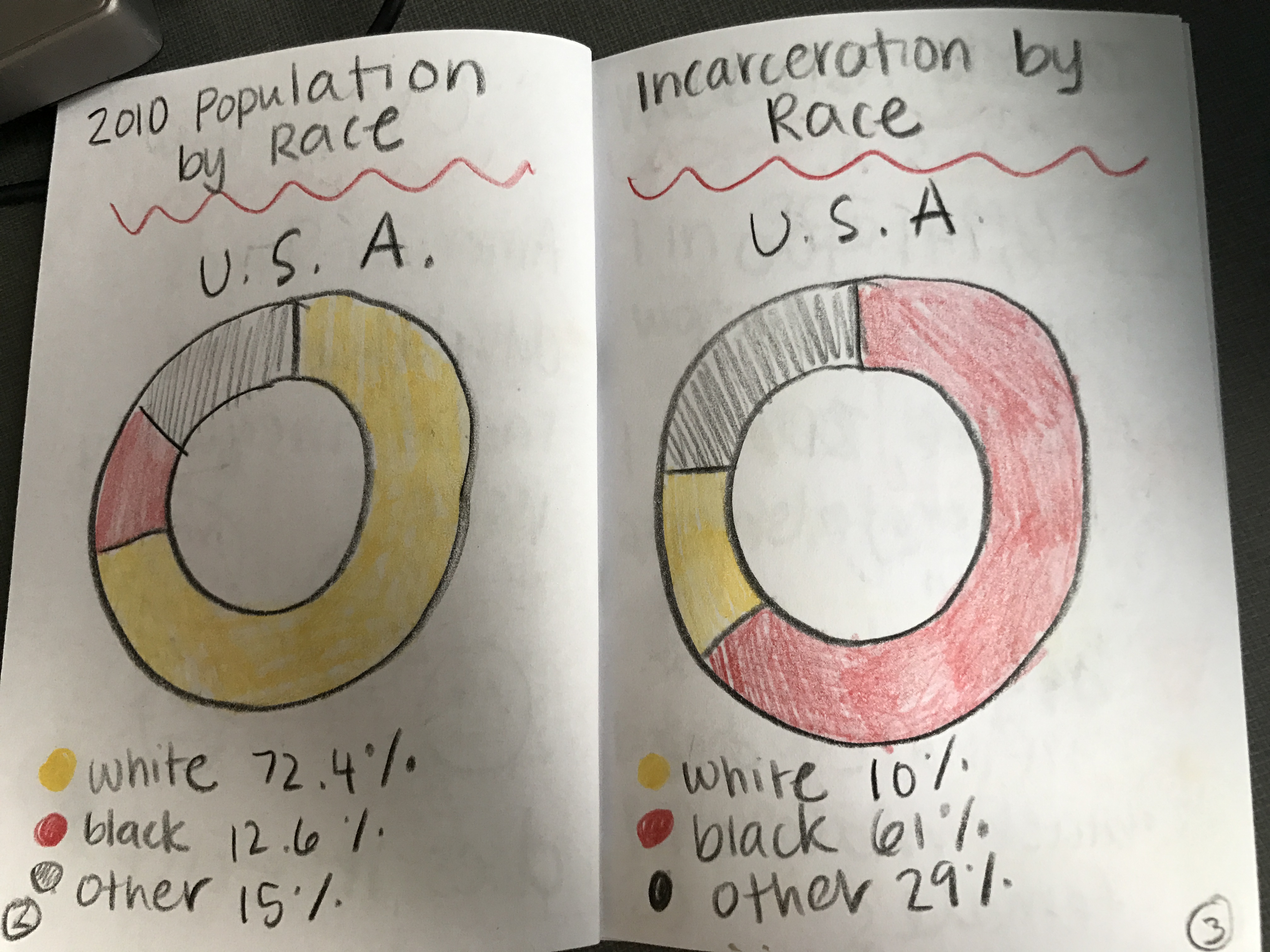
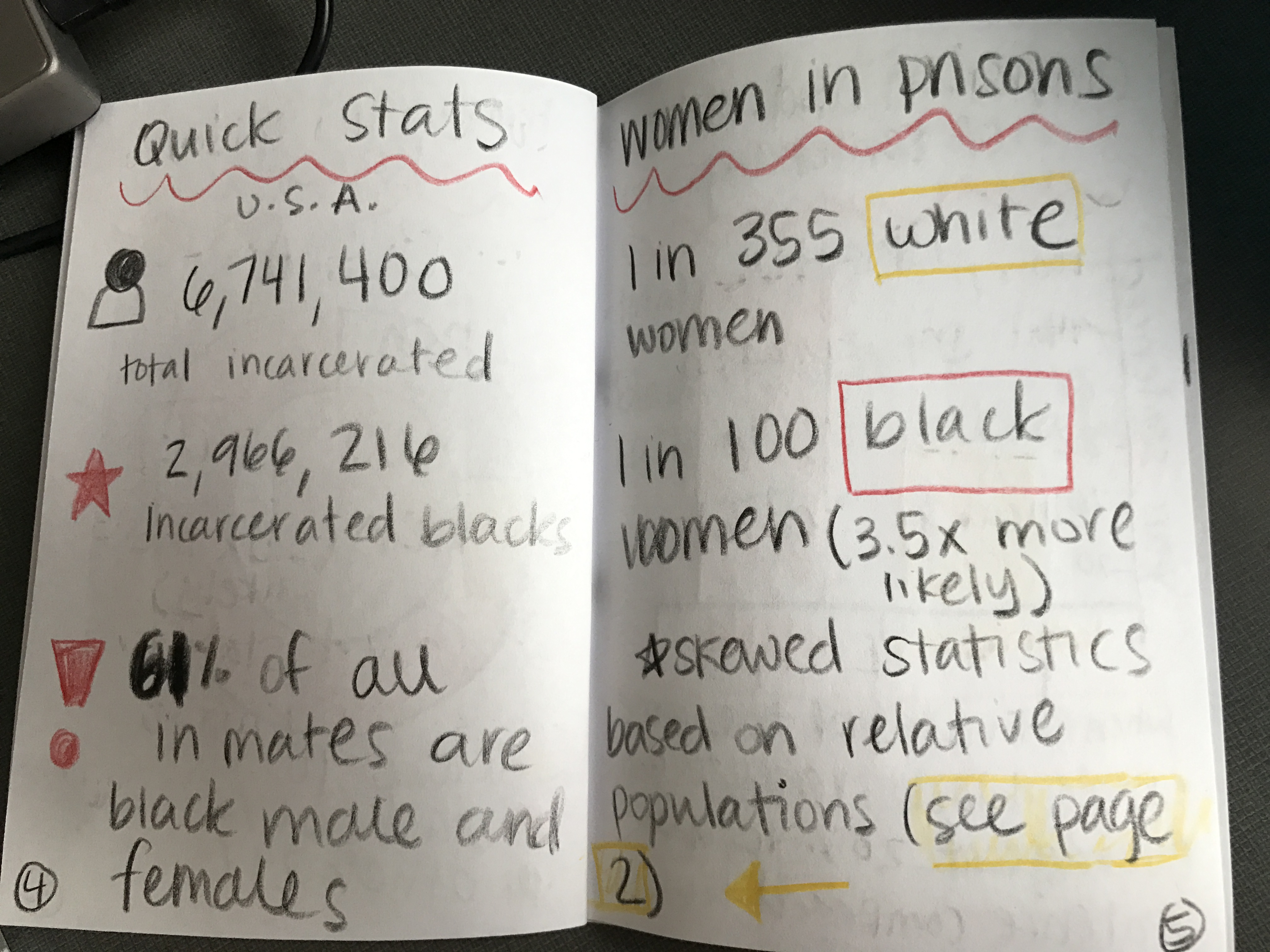
I think Notebook #5 2k and Notebook #10 were probably the most fun. I really enjoyed taking my infographic and making a physical booklet with the statistics. It was fun to get out the colored pencils and learn how to bind a book a few different ways (the first one didn’t work for me, so I had to try the other option.) Sometimes, physical items are just more connected with people than statistics online. I’ve always preferred paper books to e-books, and a flyer or booklet or pamphlet is no exception.
I really liked my letter I wrote the best, mostly because it was brief and direct, but it was a response to a two-faced comment that may otherwise go unnoticed. I didn’t include a lot of my thought process, but I liked that it was a direct response to a person who had spoken on the Black Lives Matter movement, who seemed to know nothing about it apart from the media’s coverage.
I would definitely be willing to try the visual compare/contrast venn diagram again. It was nice to put things together visually (can you tell i’m visual?) and I would also be willing to do the letter writing again in another circumstance. I felt like the letter would make a great impact.
Three tools i learned doing the notebook activities-
I learned that making a list of things I already know and things I don’t know is nice to do at the beginning of some projects, that way I have a jumping off point to start my research (what I don’t know).
I learned about a website that has A LOT of maps related to different issues and statistics in our country and in the world. This is really useful for visual learners like me, and I believe when you put a map along with a statistic, it brings it to life and helps people imagine real people are involved in world issues.
- I learned about other cloud-type systems like GoogleDocs that can help people collaborate online- I had never used google hangout, or wiki, or any of those type of meeting places. We ended up using it for our first group meeting.
8f. Look at “Collaborating Online” by Anthony Atkins. What opportunities do Googledocs or other open source tools for composing afford you as a writer? How do those compare with using a proprietary platform like Microsoft Word? How does each work for collaborating?
In our modern world, connectivity has been put into our fingertips; at the touch of a button, we can connect with people all around the world as if we are having a casual conversation in the same room. In our online class, open source tools like GoogleDocs have allowed us to collaborate effectively on our writing by providing a 24/7 platform to exchange ideas remotely from our homes, jobs, and even while on the go. GoogleDocs provides so many great tools- comment sections that are time and date stamped for people to add in their two cents whenever they are available, as well as providing every ‘draft’ of each document, allowing group members to go back to earlier drafts after changes have been made. This gives each group member a chance at composing, peer reviewing, and finalizing each individual aspect of the project with full accountability. Compared to Microsoft Word, which is a proprietary platform that must be created individually by each group member, downloaded, shared in an email, then edited by each individual person (everyone ends up with a different version with different material), GoogleDocs is the project platform of the future (which is now!).
I have also explored the mentioned Wiki options in “Collaborating Online” by Anthony Atkins, that works as a live chat board and place to share documents and ideas without requiring everyone to log in at the same time. This is something I hope to use with my group in the next few days to meet for our final Publication Effect project for English 2010, where we will collaboratively take drafts and revision we’ve composed throughout the semester, change and alter their mediums and modes of writing, to create a digital magazine.8b. Choose a section of text, or an image, or a piece of media, and write in response to it. you can structure a dialogue with your selection, or write a counterpoint to it (contradict it); write about what experiences it connects to, for you, or what other texts/images/media.

After the Black Lives Matter movement gained nationwide media attention, the movement’s name gained traction with a controversial counterpoint claiming “all lives matter”. Those who raised this counterpoint felt that the name “Black Lives Matter” expressed a certain connotation of resentment, hate, and anti-White propaganda. In the image presented above, a Black woman stands at a BLM protest with a sign that says, “Pro Black isn’t anti-White”. This sign represents a narrative that has tried to explain that the name and purpose of the BLM movement doesn’t mean that ONLY Black Lives Matter, simply that Black Lives DO Matter, and they would like to bring attention to it.
In response to the group claiming “all lives matter”, of course all lives matter. No one in this narrative has claimed otherwise. Those claiming “all lives matter” feel threatened or devalued by the BLM movement because it was solely focusing on lives of African American people. Black Lives Matter aims to bring attention, and evoke change for those lives who have been negatively impacted or taken away completely by police brutality and law enforcement.
The fallacy that Black Lives Matter is unnecessary is proven wrong in a simple statistic. While 12.2% of residents in the US identified as Black in 2010, 40% of the incarcerated population identified as Black that same year. Numbers have changed only marginally in recent years. Some may argue that Blacks commit more crimes, and therefore have a higher incarceration rate. However, prison sentences of Black males in 2010 were 20% longer than those of White males who were tried and sentenced for the same crime, proving a racial disparity in our judicial system that requires attention. This is the underlying purpose of the BLM movement.
8f. Look at “Collaborating Online” by Anthony Atkins. What opportunities do Googledocs or other open source tools for composing afford you as a writer? How do those compare with using a proprietary platform like Microsoft Word? How does each work for collaborating?
It seems that in our modern day world, technology has accomplished it’s purpose- to bring people together. “Collaborating Online” by Anthony Atkins explores the purpose of technology in human collaboration, and it’s various uses based on the platform used to collaborate. Since the invention of cloud software, or software available online for people to simultaneously share ideas, collaborate on projects, and present remotely, the world has evolved exponentially. As a writer, GoogleDocs in particular has been game-changing in the way writers, like college students, collaborate and complete group work. Sharing ideas used to be frustrating without GoogleDrive- we used to type a document on Microsoft Word, or create a presentation on PowerPoint, and we would email it as an attachment to a group member, teacher, or collaborator. They would then download it, look at it, and respond in an email with comments, questions, or suggestions. This worked, but the live, “in-text” or “in-document” conversations were missing. The cloud, GoogleDocs/GoogleDrive in particular has changed that. Now, we can “share” docs with teachers, colleagues, and collaborators. They can view the document “live”, where multiple people can chat, make side comments/annotations for specific pieces of the text, edit, revise, improve, and share ideas all at once. LIVE. This is mostly beneficial to writers, because we are able to get real-time answers to questions. Cloud has few drawbacks, including its reliance on the internet/wifi to work, as well as people editing documents without permission or consent to remove, add, or change ideas.
2f. Write a letter to one of your sources or to a politician whose ideas you disagree with. Explain, respectfully, why you disagree with their ideas. Explain your own ideas. Discuss where you think compromises could/should be made between you and the audience for your letter.
Dear Joel B. Pollak,
While doing some research for my English 2010 class here in Salt Lake City, I came across an article you composed discussing the Black Lives Matter movement and racial inequality in the United States.
A specific quote stood out to me, saying, “The Black Lives Matter movement has raged for nearly two years. In its better moments, it has provoked soul-searching by sincere Americans who want to understand each other, and who want the law to be enforced fairly as well as effectively. In its worst moments — such as the one we are enduring now — Black Lives Matter has inspired violence, terrorized police, driven up crime, and divided Americans.” This quotation seems two-faced, and I wanted to investigate it further.
I respectfully disagree with some of your statement, but am willing to play devil’s advocate and understand why you would’ve made this statement. I believe that the movement has highlighted and inspired some to be violent, but when I look at it wholly- it is a positive political movement, with the small exemption of violent participants.
I believe looking at this movement as a whole, and not singling out the minority, will help our views align better and create a mutual understanding.
Sincerely,
Shawn Moriarty Dobson2e. Write two lists entitled "What I Know" and "What I Don't Know” about my issue. Develop a list of possible resources that you could help you explore what you “know” and find answers to what you “don’t know” about your issue.
What I Know
Purpose of the BLM Movement
Evidence of racial inequality
Involvement of the public
Involvement of the media
Social biases of the public
Objectives of the BLM movement
What I Don’t Know
Exact statistics to support my claim/Exact numbers of involvement
Political implications
Other’s Personal narratives/experiences
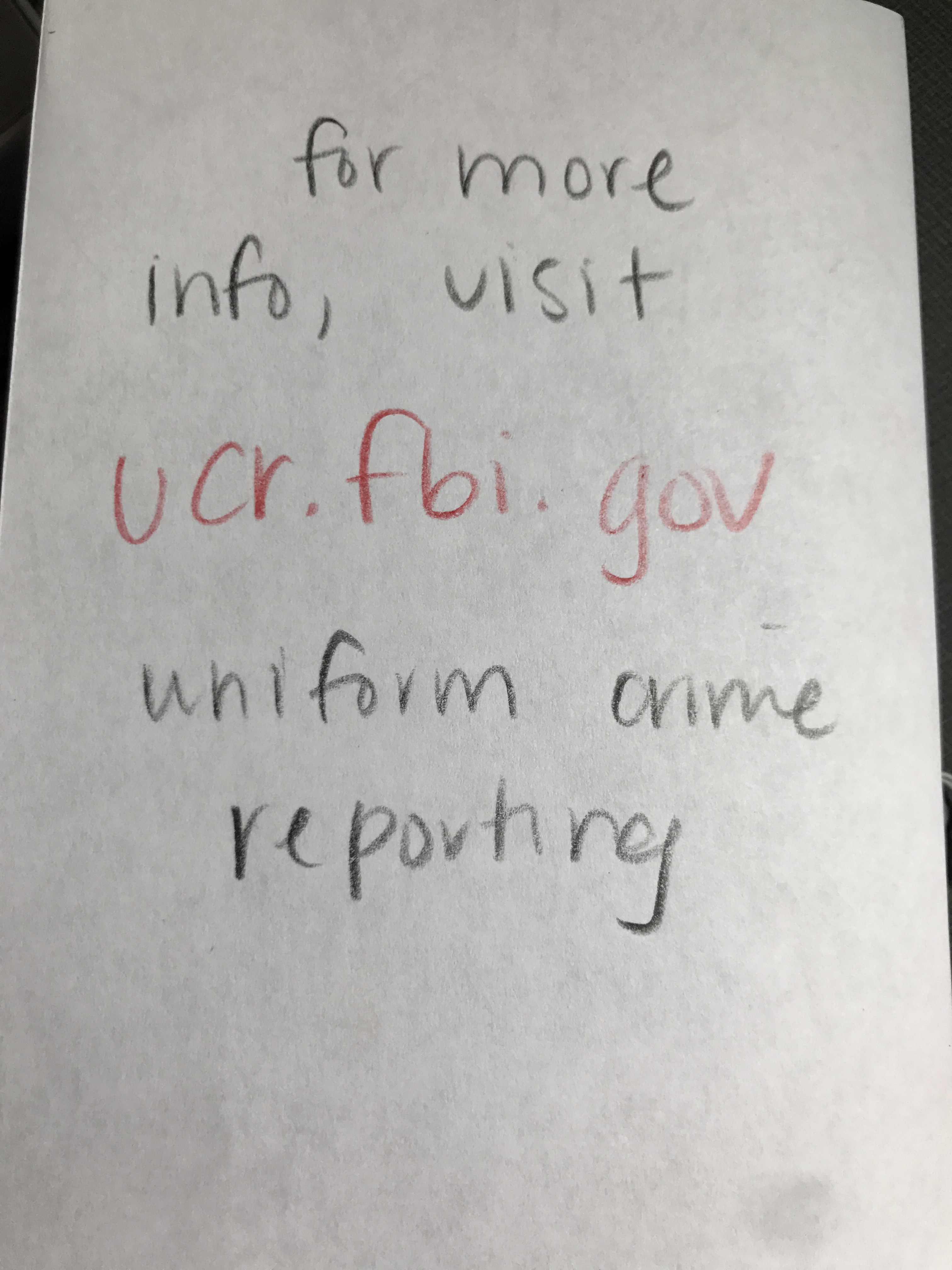
Exact statistics to support my claim - FBI/Unified Crime Reporting: 258 Blacks were killed by police in 2016. 39 were unarmed. 34% of unarmed civilians killed by police were Black males.
Source: Craven, Julia. "More Than 250 Black People Were Killed By Police In 2016 [Updated]." The Huffington Post. TheHuffingtonPost.com, 01 Jan. 2017. Web. 27 Feb. 2017
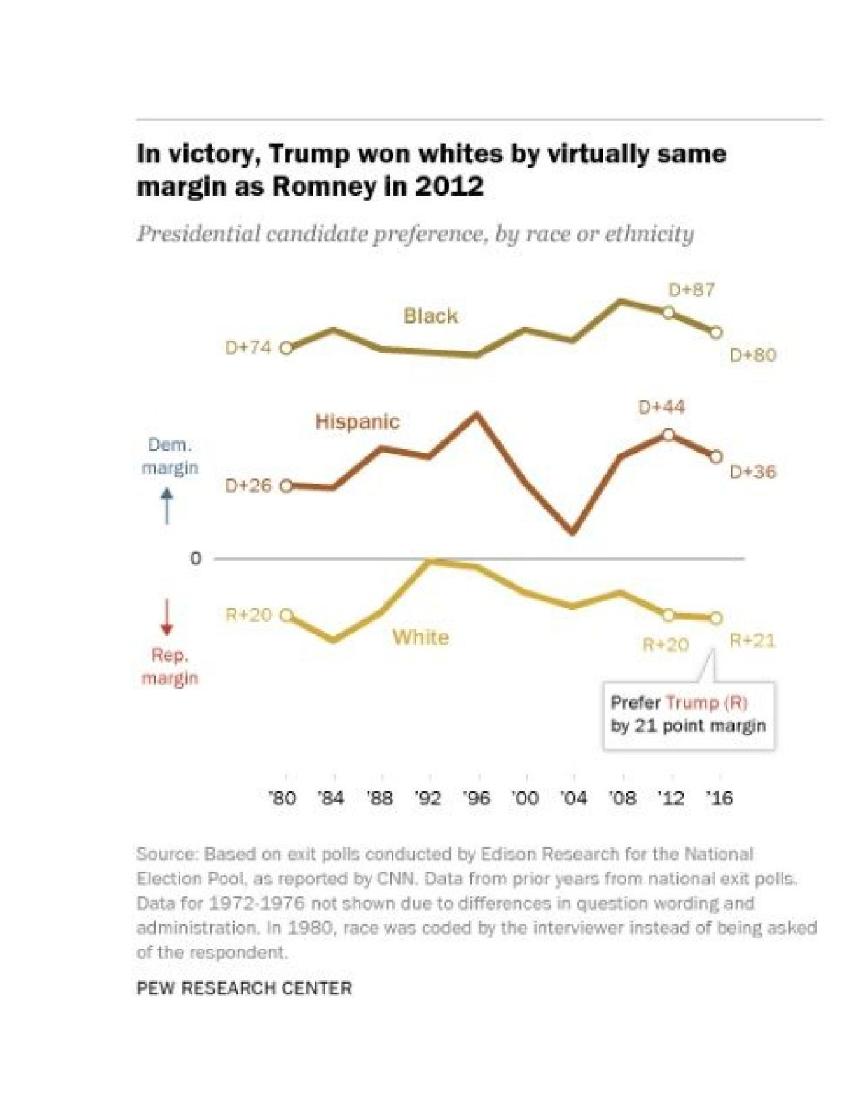
Political implications: Before our recent presidential election, Donald Trump spoke out on Black Lives Matter and the rising rate of violent crime in Black communities, and was immediately targeted as a racist for doing so. Trump’s statement that “every Black child should be able to walk to school safely” highlighted the hypocrisy of the Black Lives Matter Movement. In response, Trump’s lowest vote by race was from Blacks, who leaned the farthest towards the Democratic vote compared to Hispanics or Whites in the 2016 election. (see chart below)
Source: Donald, Heather Mac. "Black Lives Matter to Donald Trump." Wall Street Journal - Online Edition, 30 Aug. 2016, p. 1. EBSCOhost, search.ebscohost.com/login.aspx?direct=true&db=aph&AN=117740111&site=ehost-live.
Personal narratives: (Unknown Author’s Personal Narrative on Institutional Racism)
“One day I decided that I wanted a more professional parttime job. I was probably around 16. I applied at the local Belk's Department Store and got hired as a clerk in ladies' shoes. Shortly after that, because times were beginning to change and the civil rights movement had started, the manager hired a Black man as a clerk. One can't imagine the turmoil and disharmony that this action caused among the employees. An understanding prevailed that I would only assist Black customers. If there were no Black customers in the store, I would be assigned menial clean-up activities. Another Black clerk and I became close friends. Why? I think (with hindsight) that I empathized with the ostracism that he was receiving. I had experienced that from my school and out-of-school interactions due to classism. Whatever the motivation, our friendship continued through my high school years and even through my undergraduate college years. We both thought, idealistically, that we were headed to becoming store managers eventually. Of course, neither one of us did; those aspirations represented adolescent fantasizing. We were Black, and given a chance, but only part of a chance. I believe this is what Blacks in Black Lives Matter are experiencing today- a sort of justified racism due to statistics.”
Source: Herring, Roger D. "Experiencing a Lack of Money and Appropriate Skin Color: A Personal Narrative." Journal of Counseling & Development, vol. 77, no. 1, Winter99, p. 25. EBSCOhost, search.ebscohost.com/login.aspx?direct=true&db=aph&AN=1552361&site=ehost-live.
2k. Visit WorldMapper.org and search for maps directly related to your issue. Describe your first impression of the map(s). What is surprising to you about the representation of the data? Explain how the map might force your audience to consider/reconsider how culture and experience influence our perceptions of places, regions, people, and your issue.
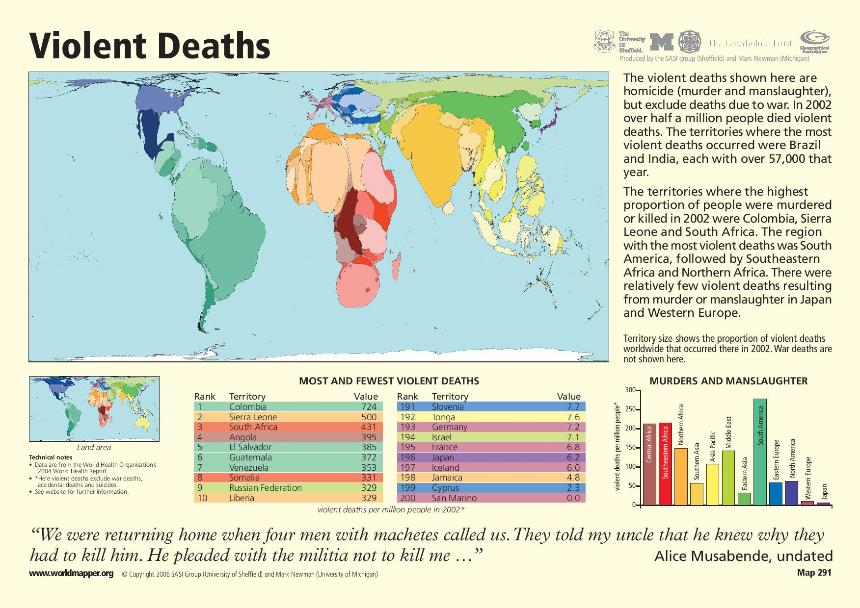
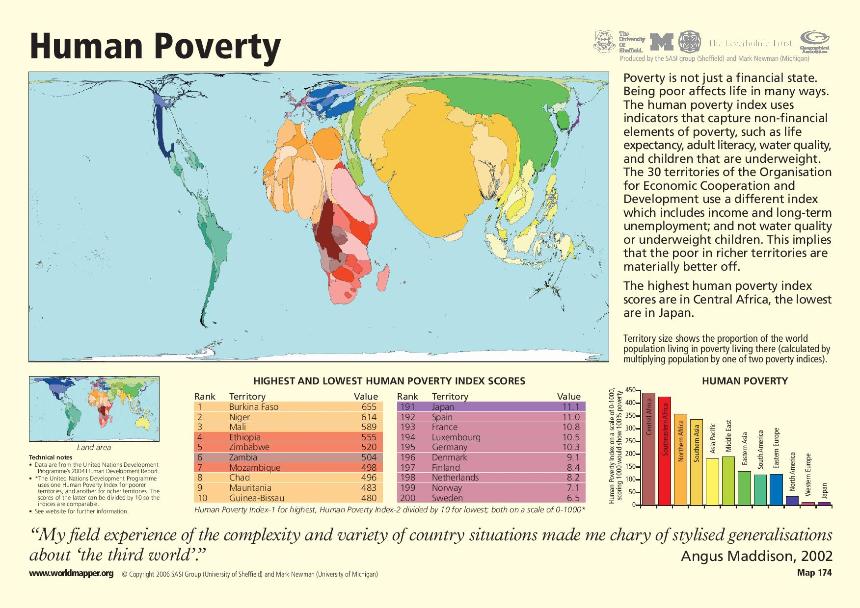
On WorldMapper.org, I searched for two different maps that directly related to my issue of racial inequality and the Black Lives Matter Movement. The BLM movement primarily focuses on the violent deaths of Blacks caused by the police force. The first map I found was showing violent deaths including murder and manslaughter, excluding deaths from war (see below). It was interesting because when the data was broken down, the United States was not mentioned on the statistics for those crimes. It was interesting however to see that the most violent deaths were occurring in primarily Hispanic and Black countries (Colombia and Sierra Leone), while the lowest countries for violent crimes were Asian and White (Germany, France, Japan). The Second map I searched was related to poverty (see below). Again, America was not mentioned on either the highest or lowest list of poverty stricken countries. Again, once more, the most poverty stricken countries were those that were primarily Black (Niger, Ethiopia), whereas those countries with the least amount of poverty were predominantly White and Asian countries.
The correlation here seems to depict and align with the problems we have here in America- areas that are heavily populated by Blacks and Hispanics have the most violent deaths and poverty, while areas that are heavily populated by Whites have lower numbers.
This finding in no way places blame on those races where violence and poverty run rampant, but definitely highlight a disadvantage to future generations who happen to be born in those communities.
2b. Write down five statements from your research (sources). then write some commentary that responds to, or challenges, or embroiders upon, or adds to, or offers a bit of relevant information that's missing--or any other kind of commentary--for each statement.
“I have never had the "discussion" with my children about how to act if stopped by a police officer. My father never had that discussion with me either.” Monte Frank, TheHill.com
This quotation appeared among many similar quotations in an article published by Monte Frank on TheHill.com discussing deep drawn prejudices and misunderstandings of the BLM movement. This particular quote gave insight to those who truly do not understand the purpose of the BLM movement, and that because ‘I’ have never had to do things like talk to my children on how to act if stopped by police, those who do have these discussions must be the problem, not people like me. The quotations as a whole raise awareness towards ignorance.
“The Black Lives Matter movement has raged for nearly two years. In its better moments, it has provoked soul-searching by sincere Americans who want to understand each other, and who want the law to be enforced fairly as well as effectively. In its worst moments — such as the one we are enduring now — Black Lives Matter has inspired violence, terrorized police, driven up crime, and divided Americans.” Joel B. Pollak, Brietbart.com
This quotation was powerful to me in response to both sides of the argument when it comes to the protesting for racial inequality. There have been ‘better’ moments where organized and peaceful protesters have provoked soul-searching for our nation with their narrative. Then, there have been bad moments where violence, rage, and terror have taken over the voices of those trying to make a difference. I chose this quote because I felt like it represented the movement as a whole- when there are political protests and movements, they are made up of a vast majority who are fighting for the same thing. However, there will always be those who go to the extreme.
“BY CONTINUING TO USE “ALL LIVES MATTER” TO DROWN OUT THE CRY OF “BLACK LIVES MATTER,” THE REAL PROBLEMS THE MOVEMENT IS TRYING TO ADDRESS ARE BEING IGNORED.” Tyler Huckabee, Relevantmagazine.com
I wanted to respond to this quotation because it has been a discussion that “Black Lives Matter” insinuates that all lives don’t matter. In the article, the narrative continued by giving the example of a person who makes a 911 call saying “my house is being robbed!” the 911 operator begins to talk, and the caller says “My address is…” and the operator responds by saying, “Woah, why are we bringing your address into this? All homes matter, not just yours.” It gave a highlight that those who are in trouble, those experiencing terror at that very moment have a right to take priority.
“See, “Black Lives Matter“ is trying to highlight that there is demonstrable evidence that black lives matter less than white lives to the criminal justice system (and the American government as a whole).” Jessi Damiani, Huffingtonpost.com
My response to this quotation would include that many people try to discredit the evidence that comes along with the creation of the BLM movement. It is factual and evident that Black Americans have been treated less than fairly in our criminal justice system, and it should open people’s eyes to the institutional racism that still happens today.
“We can’t affect national narrative, we can’t affect national legislation that comes down and affects local people if local people don’t push back and take a stand about what's happening in local communities,” Chelsea Fuller, USAToday.com
Chelsea Fuller here describes the essence of how BLM keeps going- there is no national, or state, or city leader for the movement. It is a self-led movement by locals who are taking a stand- there is no leader, because it is a community goal to have the different voices and experiences heard all over the country.
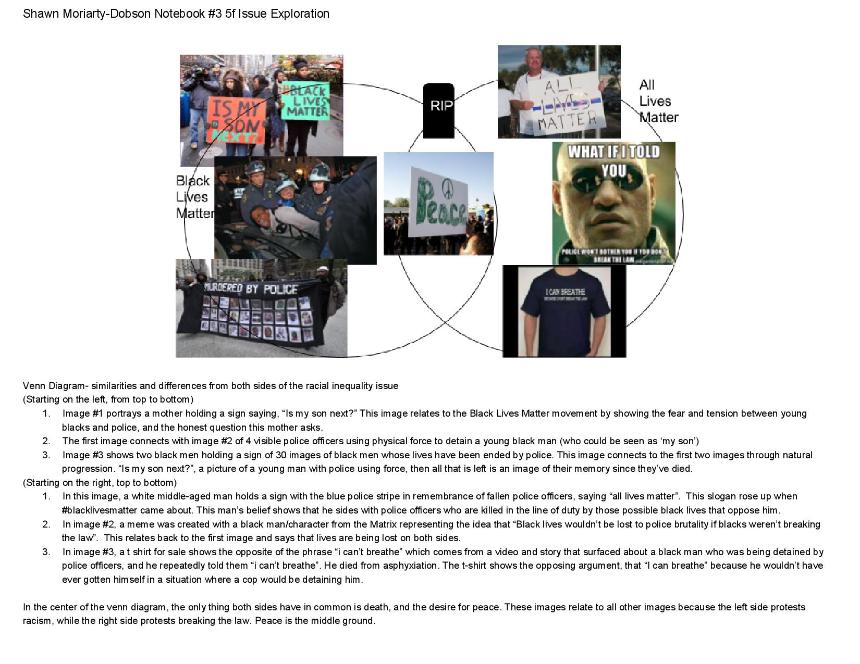
(Text appears in image, but isn't very legible. View pictures above and read below)
Venn Diagram- similarities and differences from both sides of the racial inequality issue
(Starting on the left, from top to bottom)
Image #1 portrays a mother holding a sign saying, “Is my son next?” This image relates to the Black Lives Matter movement by showing the fear and tension between young blacks and police, and the honest question this mother asks.
The first image connects with image #2 of 4 visible police officers using physical force to detain a young black man (who could be seen as ‘my son’)
Image #3 shows two black men holding a sign of 30 images of black men whose lives have been ended by police. This image connects to the first two images through natural progression. “Is my son next?”, a picture of a young man with police using force, then all that is left is an image of their memory since they’ve died.
(Starting on the right, top to bottom)
In this image, a white middle-aged man holds a sign with the blue police stripe in remembrance of fallen police officers, saying “all lives matter”. This slogan rose up when #blacklivesmatter came about. This man’s belief shows that he sides with police officers who are killed in the line of duty by those possible black lives that oppose him.
In image #2, a meme was created with a black man/character from the Matrix representing the idea that “Black lives wouldn’t be lost to police brutality if blacks weren’t breaking the law”. This relates back to the first image and says that lives are being lost on both sides.
In image #3, a t shirt for sale shows the opposite of the phrase “i can’t breathe” which comes from a video and story that surfaced about a black man who was being detained by police officers, and he repeatedly told them “i can’t breathe”. He died from asphyxiation. The t-shirt shows the opposing argument, that “I can breathe” because he wouldn’t have ever gotten himself in a situation where a cop would be detaining him.
In the center of the venn diagram, the only thing both sides have in common is death, and the desire for peace. These images relate to all other images because the left side protests racism, while the right side protests breaking the law. Peace is the middle ground.
My personal experience with the social justice issue of racial inequality/ the BLM Movement involves my observation of racism and prejudice in the workplace, in public, and between community members in healthcare. I could carry many assumptions about the issue being a white man in America, including that it’s ‘not my problem’, but it is. I have assumed the opposite and feel the need to become involved in the solution to these issues. I have already done some research and followed the BLM movement closely to understand the purpose and objectives of the movement, including that the Black community in America wants their voices to be heard. The media and magazines/journalists have already provided me with a diverse and conflicting perspective on this issue. Many community members, family members, and close friends disagree on the matter as well.
1. Issue discovery/Identifying a Community Organization
1a. Make a list of your strengths (personal, academic, professional, etc.), and then make another list of your interests. Consider the ways in which you might benefit a non-profit organization. Skim through the Finding a Community Partner folder, or search other familiar locales for organizations you’d like to work with, and investigate the various websites of the organizations as well. What organizations have set up effective sites? What organizations do not? How do their documents affect your willingness to engage with them?
List of strengths:
Good communication skills
Dedication to my job
Good at building bikes
Compassionate
Funny/ good at making jokes
Problem solver
Financial planning/taxes
List of interests:
Mountain biking
Snowboarding
Building & selling bikes
Being active
Travel
NHL Bruins (Hockey Team)
NFL Patriots (Football)
I came across the Black Lives Matter website. Their site is black and yellow, with catchy fonts and seemed to be well organized at first. However, when I clicked on “find chapter” to search for Utah, it came up with a calendar that only outlined some events in Dubai. There were not lists of the chapters around the country, and when I searched “Utah” it said “No results were found”. This site would make it hard to get involved with the organization online.
I then researched the NAACP and their involvement in my issue of the BLM Movement, and came across their site. It was extremely well thought out, and all tabs and links worked properly and helped me reach a page where I could find some events and contacts for Salt Lake City. I believe it would be easier to get involved with this association based on their site.
1b. Create a rhetorical map of a phone call to a community organization you’re interested in serving. In your map, articulate how you might establish credibility for yourself, convey a clear and purposeful message, and appeal to the values and beliefs of the volunteer coordinator at the organization.
Organization: ACLU Utah (for racial equality)
First, I would address myself as a current corporate employee who is enrolled in college and is seeking to help bring equality to the Salt Lake Valley. Next, I would discuss my standing in the fight for racial equality- I am a white male, and I feel the need to represent the desire for racial equality from myself as a white male. With current social unrest in the Black Lives Matter Movement, as well as the controversial new inaguration of our 45th president, I believe the time is now to become involved in equality for race.
1c. Call two or more community organizations to discuss potential service, and then write a description of that experience, explaining your thoughts, feelings, and actions.
I was able to find a phone number for general questions for ACLU Utah, an organization for racial equality. The first time I called, I was a bit confused which option on the automated menu I should choose- Organization Information, Activities, or Volunteer Opportunities. I ended up calling back and going through each menu to see which would give me the info I wanted. I thought after I got through the initial confusion, that the information was helpful, although the recording did tell me to refer back to the website for many things. When I got to the option for volunteer opportunities, it send me directly to a voicemail.
I wasn’t able to find many phone number contacts for a lot of these organizations- it seems like website and emails are the primary resource for communication. I looked for a phone number for the BLM movement, and was unsuccessful, so I ended up contacting the NAACP’s offices. I eventually got to a gatekeeper, who gave me some general information and asked me to refer to the events on their website. It was my impression that the woman on the other line was confused why I was calling to get involved, but the general consensus was volunteer opportunities arise at their events and political protests.
1d. What community organization have you chosen to work with? Why? What concern or need does the organization address? What community group(s) does that organization serve? What values, beliefs, or political positions does the organization embrace? What are writing topics that might relate to your organization? (Your topics might come from various layers of society: social, economic, political, ethnic, linguistic, religious, etc.)
I have chosen to work with ACLU Utah because they are representing the fight for racial equality. This organization addresses the need and concern for all races to experience equality in their representation in politics, jobs, and social situations. This organization (American Civil Liberties Union) serves any and all people in the community that feels they’ve had their civil liberties violated, or those who wish to fight for equality. They embrace the belief that all Americans & minorities deserve civil liberties, with their website specifically mentioning the Bill of Rights. I will be able to relate many writing topics to my organization including the Black Lives Matter Movement, the recent increase in activism for women’s equality in pay and reproductive rights.